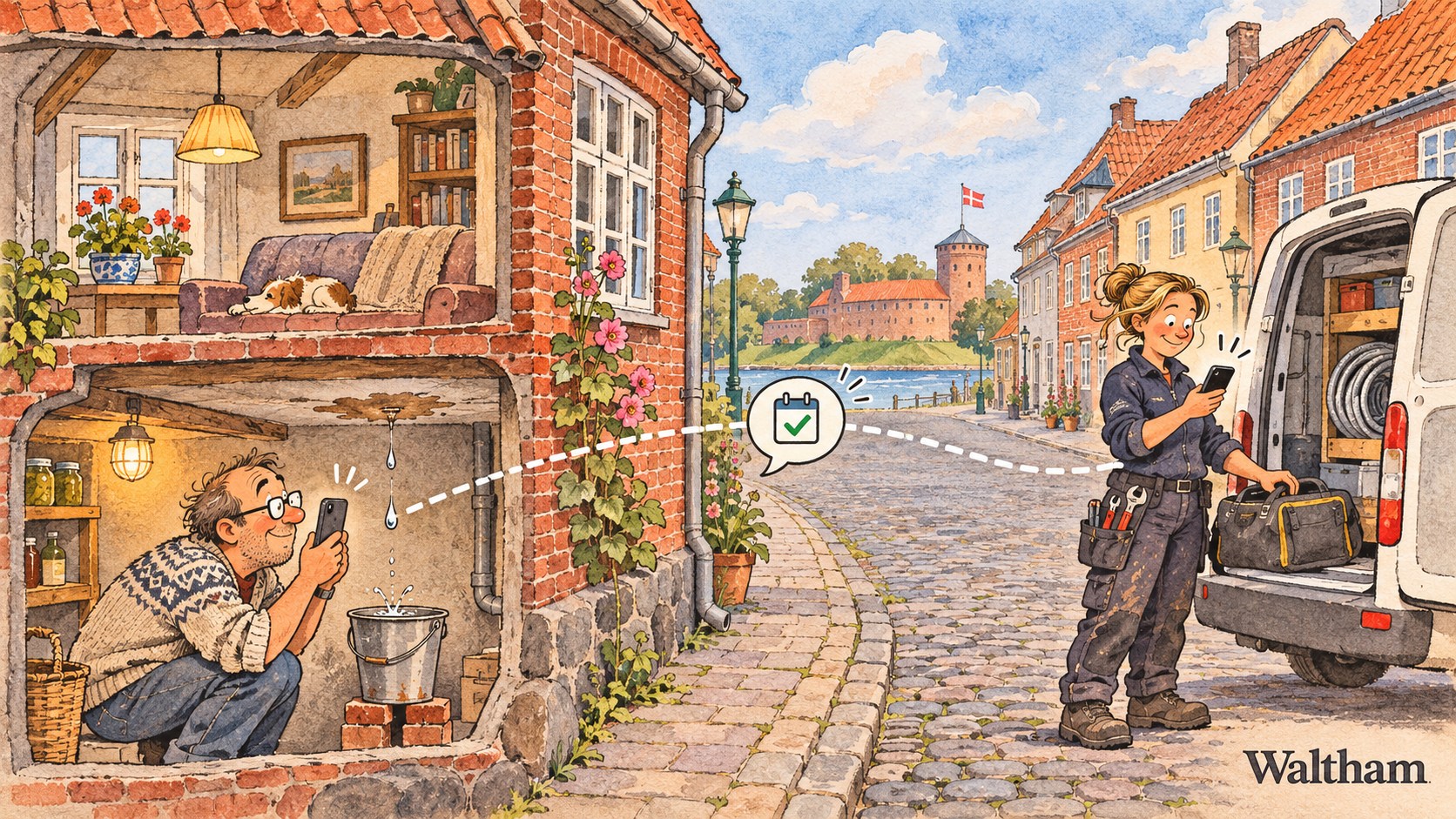
Imagine water dripping through the ceiling of my basement in Nyborg. I put a bucket under the drip, take a photo and message ChatGPT. “It’s dripping from here. Can you find a plumber who can come today?”
I could simply describe what I see. A photo saves me from guessing what the pipe or fitting is called. ChatGPT might ask what’s directly above the basement. “The old bathroom,” I reply.
Two streets away, a plumber is packing up her tools. She has time for one more job before leaving town. I don’t know she’s there. She doesn’t know I need her. In ten minutes she could be on her way while I’m still calling around.
A secretary we share
When I give ChatGPT a task and walk away from my computer, I can get a notification on my phone when there’s news. Imagine if, this time, the plumber were the one who got the notification.
With my permission, ChatGPT sends her a short enquiry and the photo. She can see which neighbourhood it’s in and where the water is coming through. She knows the houses on my street. They were built around the same time, and last winter she dealt with a similar problem at my neighbour’s. She already has an idea of where to look and what to bring.
She replies from her phone. “I can be there in half an hour. The call-out fee is DKK 850.”
I get the time, the call-out fee and a reason she’s a good fit. She’s already in the area and has worked on that kind of house before. I say yes. ChatGPT sends her the address, and we both get a confirmation.
For those few minutes, we’ve had a shared secretary. I’ve described the problem once, she’s replied between jobs, and we both know what we’ve agreed.
A larger firm could check its work schedule to see who can take the job. A self-employed plumber with one van could answer on her phone as she walks out to it. The firm can keep its calendar and customer records to itself. I just need the details it can confirm about my job.
Why ChatGPT Business Hub is worth watching
When I tried to register Waltham in ChatGPT Business Hub, I was struck by how many categories there were. It made me think about how little a word like consultant or plumber tells a customer. Does the firm take emergency calls? Does it cover Nyborg? Does it know the plumbing you typically find in an older house? Those are the questions that help a customer decide whom to call.
OpenAI launched Businesses in ChatGPT in beta on 10 November 2026. Eligible businesses can use Business Hub to claim their profile and update their information after verification. Some US online retailers and service businesses can also offer a chat that answers customer questions. The plumbing appointment in Nyborg is an example of what might become possible if a conversation like that could eventually lead to a confirmed booking. OpenAI’s announcement of Businesses in ChatGPT.
If you run a business, I’d keep an eye on Business Hub and see whether you can manage your profile. Read your description as a customer would. Is it clear what jobs you take on, where you work and how to reach you? You can make all of that clear on your own website today as well.
What a town might gain
A town can have the tradespeople it needs and still find it difficult to get help. A plumber might have an hour to spare. A customer has a problem right now. They just need to reach each other while that hour is still free.
When that happens, the customer can get help sooner, the plumber can spend less time driving, and her familiarity with the houses on the street might save a second visit. She’s built up that knowledge over years, one house at a time. The next customer can benefit from it if they find each other in time.
That’s one of the more down-to-earth reasons I’m optimistic about AI. The next time water drips into the basement, help might already be two streets away. Imagine getting the appointment sorted before the van drives off.